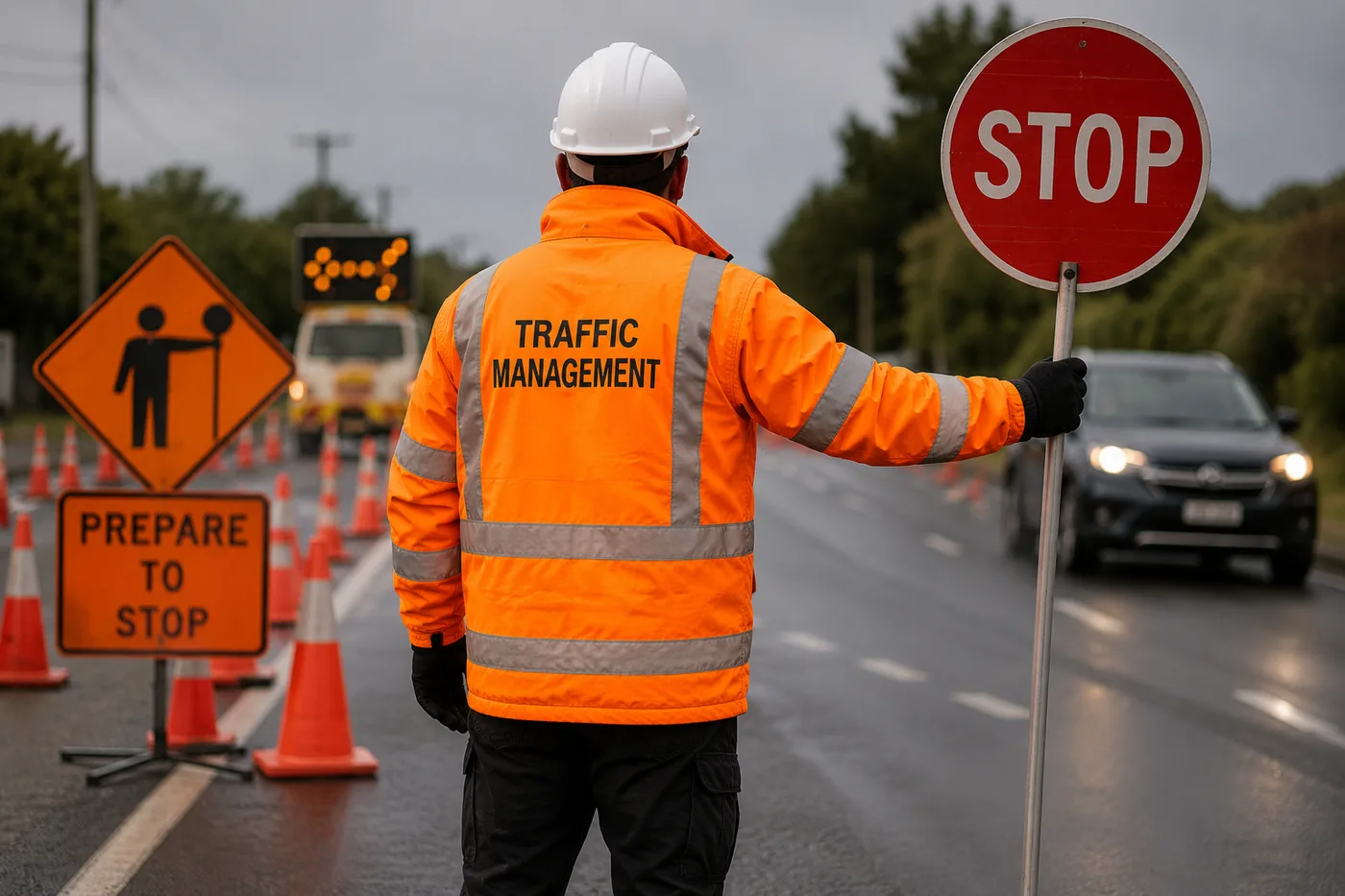
Know the NZGTTM before you get on site.
Traffic controller and STMS certification practice: traffic control plans, signs and devices and site safety.
Try free → Pay $14.99 → Instant access
- No account needed
- An explanation on every question
- 30 days full access
About Traffic Management (TC/STMS)
Temporary traffic management in New Zealand has changed twice in quick succession. The TMO and STMS warrant system ended on 1 November 2024 and was replaced by awarded unit standards, with skill standards following; and the New Zealand Guide to Temporary Traffic Management now replaces CoPTTM, with traffic management plans expected to adopt the NZGTTM approach from 1 July 2026. Preparation built on CoPTTM alone is preparation on superseded guidance, so Asessly practises the current framework: risk-based design, the HSWA 2015 duties that sit behind it, signs and devices, site setup, and the expanded requirements for vulnerable road users.
Aligned to: NZ Guide to Temporary Traffic Management (NZGTTM)
- 5 sections
- NZGTTM
What the full product covers
- NZGTTM framework and HSWA duties
- Risk assessment and traffic management plans
- Signs, devices and delineation
- Site setup, roles and credentials
- Vulnerable road users and live-lane work
Question bank
The sample questions are live. The full bank of 170 is being written and reviewed, and this product goes on sale when it is published, not before.
Where our information comes from
- NZ Transport Agency Waka Kotahi: Code of practice for temporary traffic management · checked 2026-08-22
- NZ Transport Agency Waka Kotahi: Training and assessment · checked 2026-08-22
- NZ Transport Agency Waka Kotahi: Warrants · checked 2026-08-23
Common questions
About Traffic Management (TC/STMS) and how Asessly prepares you for it.
Questions about Asessly itselfIs CoPTTM still the current framework?
No. The New Zealand Guide to Temporary Traffic Management replaces CoPTTM, with traffic management plans expected to adopt the NZGTTM approach from 1 July 2026. Preparation built on CoPTTM alone is preparation on superseded guidance.
Do STMS warrants still exist?
No. The TMO and STMS warrant system ended on 1 November 2024 and was replaced by awarded unit standards, with skill standards and micro-credentials following through NZQA-approved training providers. NZTA no longer issues TTM warrants at all, and unit standards 31959 to 31963 expire from the New Zealand qualifications framework on 1 January 2027, although they stay on the record of achievement of anyone who already holds them. Confirm the current credential requirement with NZ Transport Agency Waka Kotahi before booking training.
What does a risk-based approach change in practice?
You assess the specific site and design controls proportionate to its risks, rather than selecting a standard layout that approximately fits. The plan has to justify its controls, which raises the standard expected of whoever designs and supervises the work. It also moves competence onto the business rather than a central warrant register: under the NZGTTM and the Health and Safety at Work Act 2015 it is the PCBU that must be satisfied its workers are trained and competent.
What does Asessly cover?
The NZGTTM framework and the HSWA 2015 duties behind it, risk assessment and traffic management plans, signs, devices and delineation, site setup and roles, and the expanded requirements for vulnerable road users.
Does Asessly award unit or skill standards?
No. We are not affiliated with NZ Transport Agency Waka Kotahi, we do not award unit or skill standards, and Asessly practice does not qualify anyone to work on a road.
Why does this area change so often?
Temporary traffic management moved from a prescriptive code to a risk-based guide, and the credential system changed alongside it. Because dates in this area have shifted before, check the current position with NZTA rather than relying on any third-party page.
Start with free questions
The real interface, the real explanations, and a score at the end.