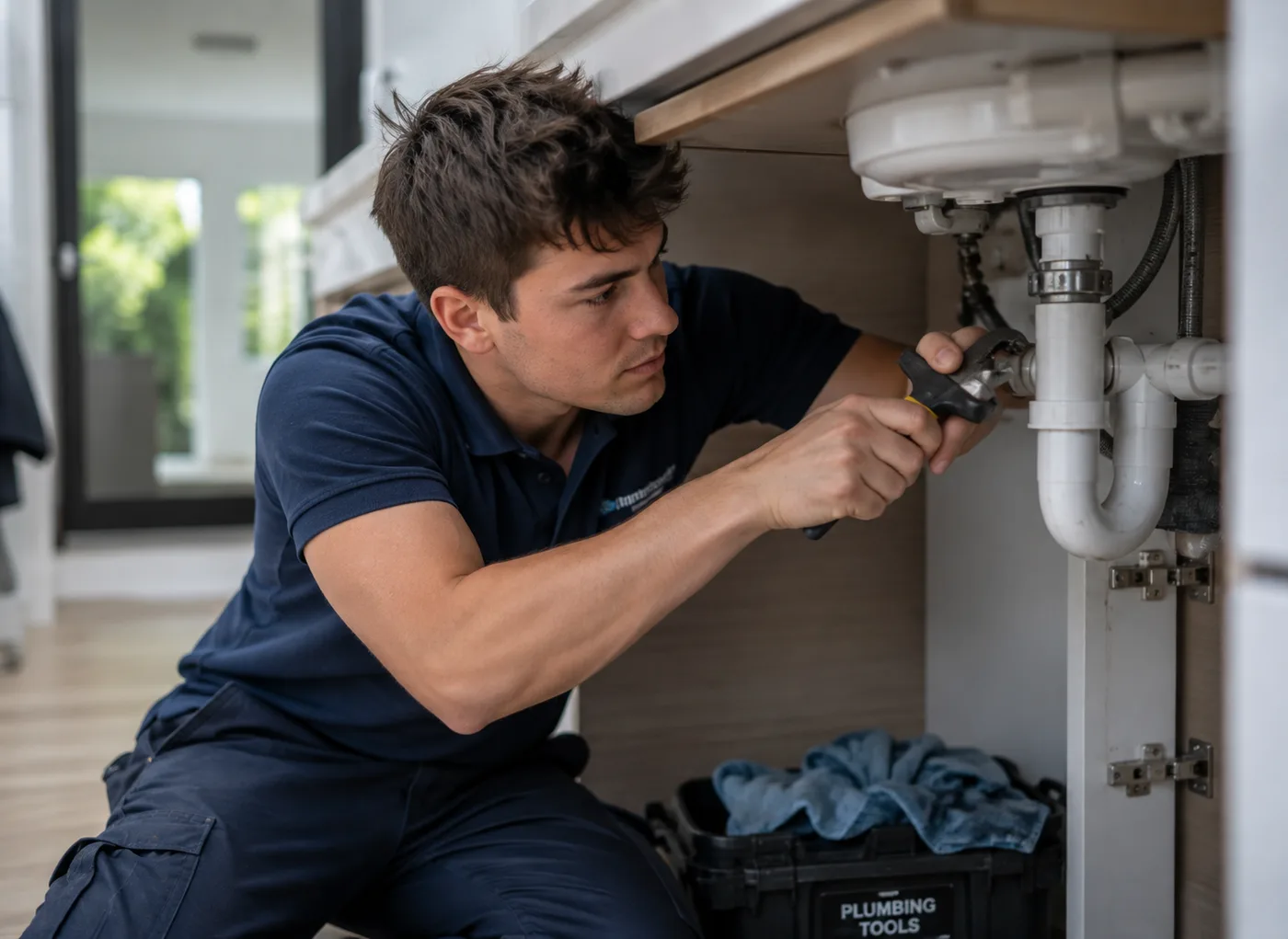
Know your G12 and G13 cold.
Practice across the nine knowledge areas behind NZ plumbing trade training and PGDB registration and licensing.
Try free → Pay $19.99 → Instant access
- No account needed
- An explanation on every question
- 30 days full access
About Plumbing Apprentice (PGDB)
Sanitary plumbing in New Zealand is restricted work: under the Plumbers, Gasfitters, and Drainlayers Act 2006 it must be done by someone authorised by the Plumbers, Gasfitters and Drainlayers Board, or under the supervision of an authorised person. The theory that sits behind that authorisation is largely public: Building Code clauses G12 Water Supplies and G13 Foul Water, their acceptable solutions, and the standards they cite. Asessly organises preparation into nine knowledge areas covering water supply, hot water and tempering, backflow prevention, sanitary plumbing, drainage and venting, and the legislation that frames them.
Aligned to: PGD Act 2006 & Building Code G12/G13
- 9 sections
- PGD Act 2006
What the full product covers
- Health, safety and site practice
- Legislation, authorisation and the PGD Act 2006
- Water supply and Building Code G12
- Hot water systems and tempering
- Backflow prevention and cross-connection control
- Sanitary plumbing and Building Code G13
- Drainage, traps and venting
- Roof drainage and stormwater
- Materials, tools and installation practice
Question bank
The sample questions are live. The full bank of 310 is being written and reviewed, and this product goes on sale when it is published, not before.
Where our information comes from
- Plumbers, Gasfitters and Drainlayers Board · checked 2026-08-22
- PGDB: Examination information · checked 2026-08-22
- Building Performance: G12 Water supplies · checked 2026-08-22
- Building Performance: Preventing scalding from tap water · checked 2026-08-22
Common questions
About Plumbing Apprentice (PGDB) and how Asessly prepares you for it.
Questions about Asessly itselfWhat does Asessly cover for plumbing apprentices?
The knowledge behind New Zealand plumbing registration: the Plumbers, Gasfitters and Drainlayers Act 2006, and Building Code clauses G12 (water supplies) and G13 (foul water), which together carry most of the theory an apprentice is assessed on.
Does this replace an apprenticeship or PGDB examination?
No. Asessly is preparation and practice. We do not deliver PGDB examinations, and Asessly practice does not lead to registration or a practising licence.
Are these real PGDB examination questions?
Yes — Asessly questions are aligned with the official resources covered in the PGDB registration examinations. They follow the published standards and legislation the Board examines, including G12 and G13, with an explanation naming the rule behind every answer.
Why do G12 and G13 matter so much?
They are the Building Code clauses that govern water supplies and foul water, which is the substance of most plumbing theory in New Zealand. Knowing where a requirement comes from is what separates a memorised answer from an applied one.
How many questions are in the bank?
The plumbing bank is being built towards 310 questions. The number shown on the card is always the number actually published, not the target, so the figure you see is a measurement rather than a promise.
How are PGDB registration examinations actually sat?
Through Aspeq. Once the Board confirms your eligibility report has been loaded, you book and pay for a sitting in your Aspeq account. Exams run on a regular cycle at centres around the country, and in some overseas locations by arrangement. You can resit as often as you need, and a failed second attempt brings a three-month stand-down before the next one.
Can I try it before paying?
Yes. Five sample questions are free, each with an explanation naming the rule it comes from, and no account is needed.
Start with free questions
The real interface, the real explanations, and a score at the end.